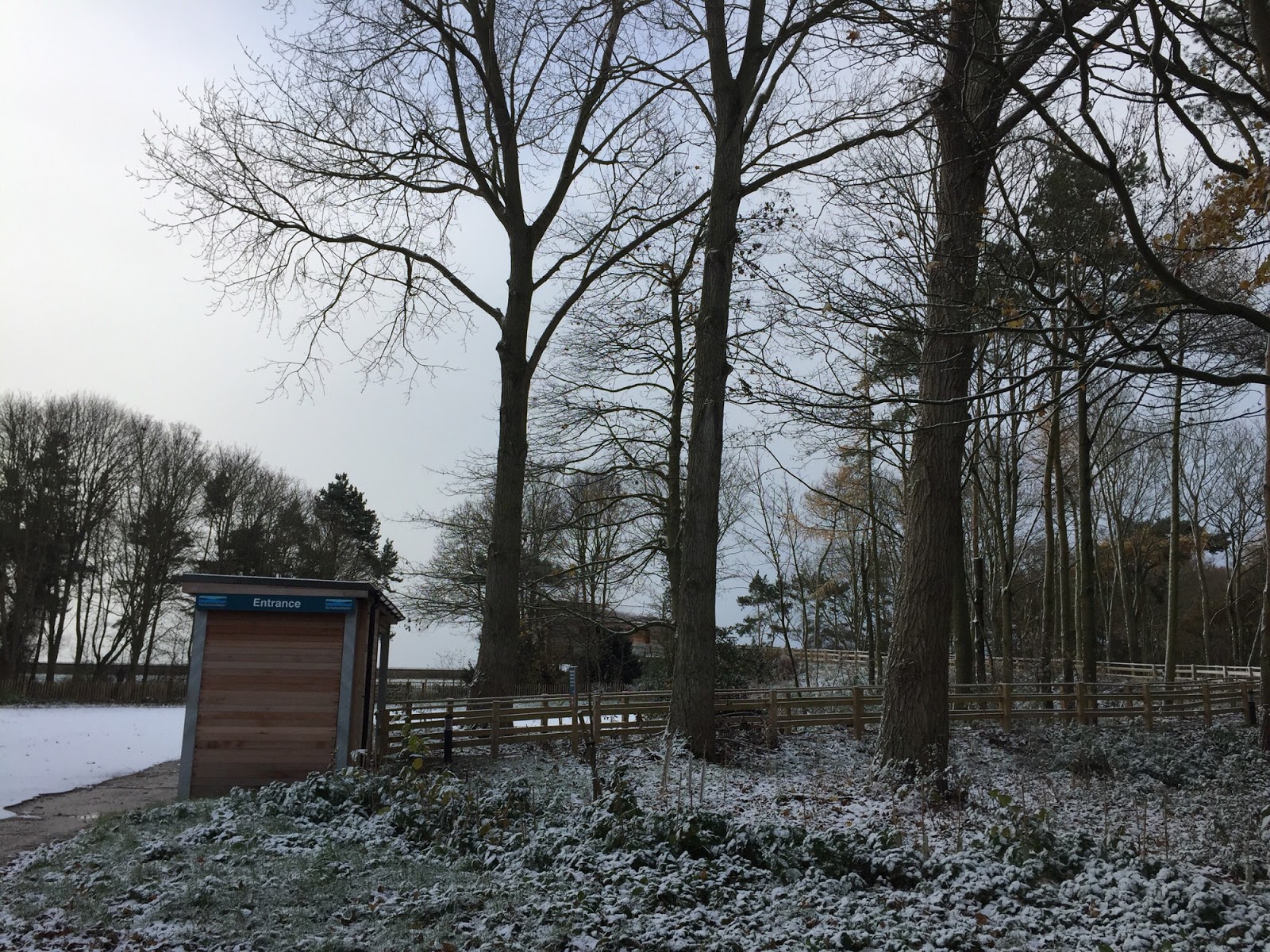
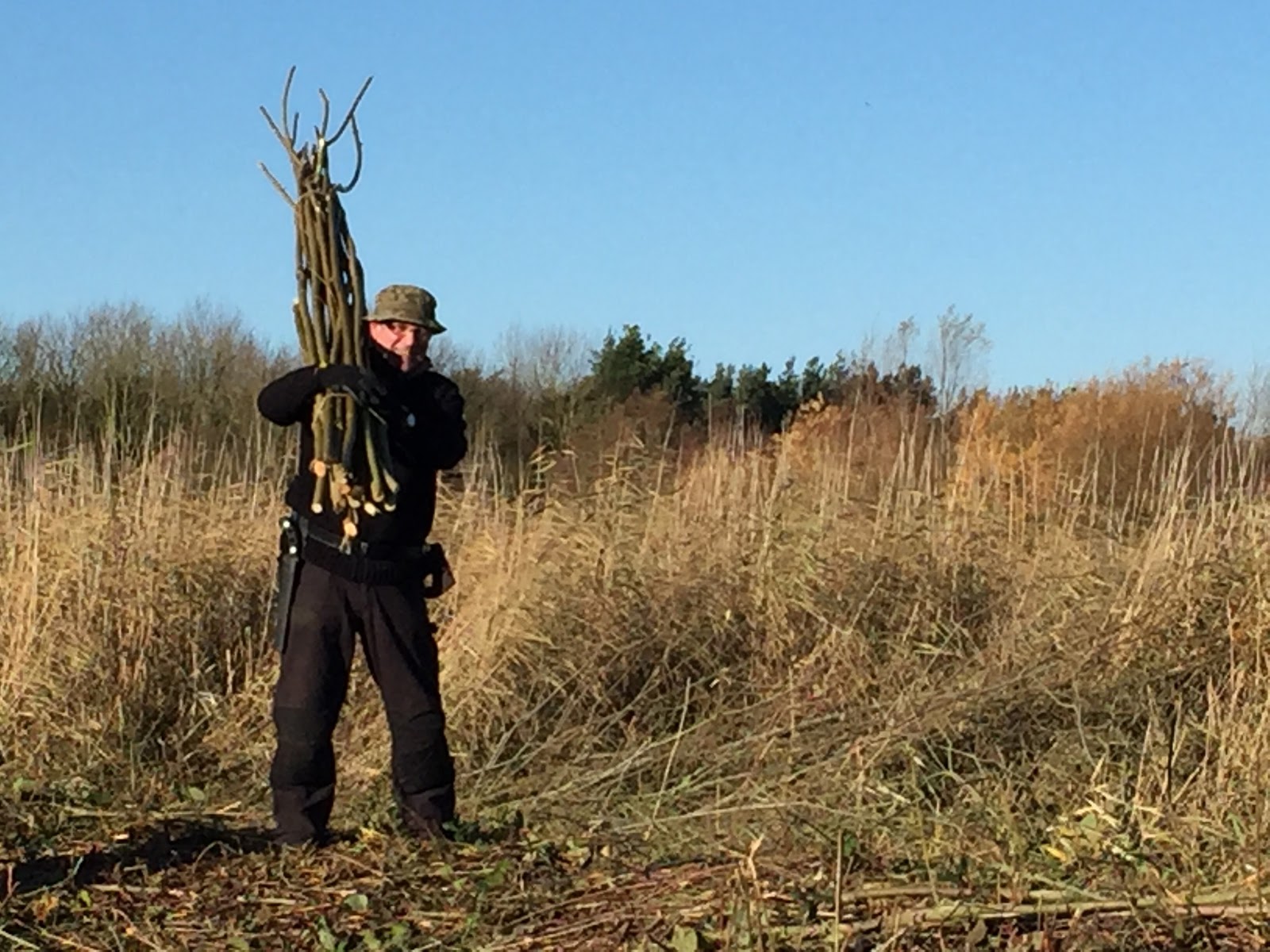
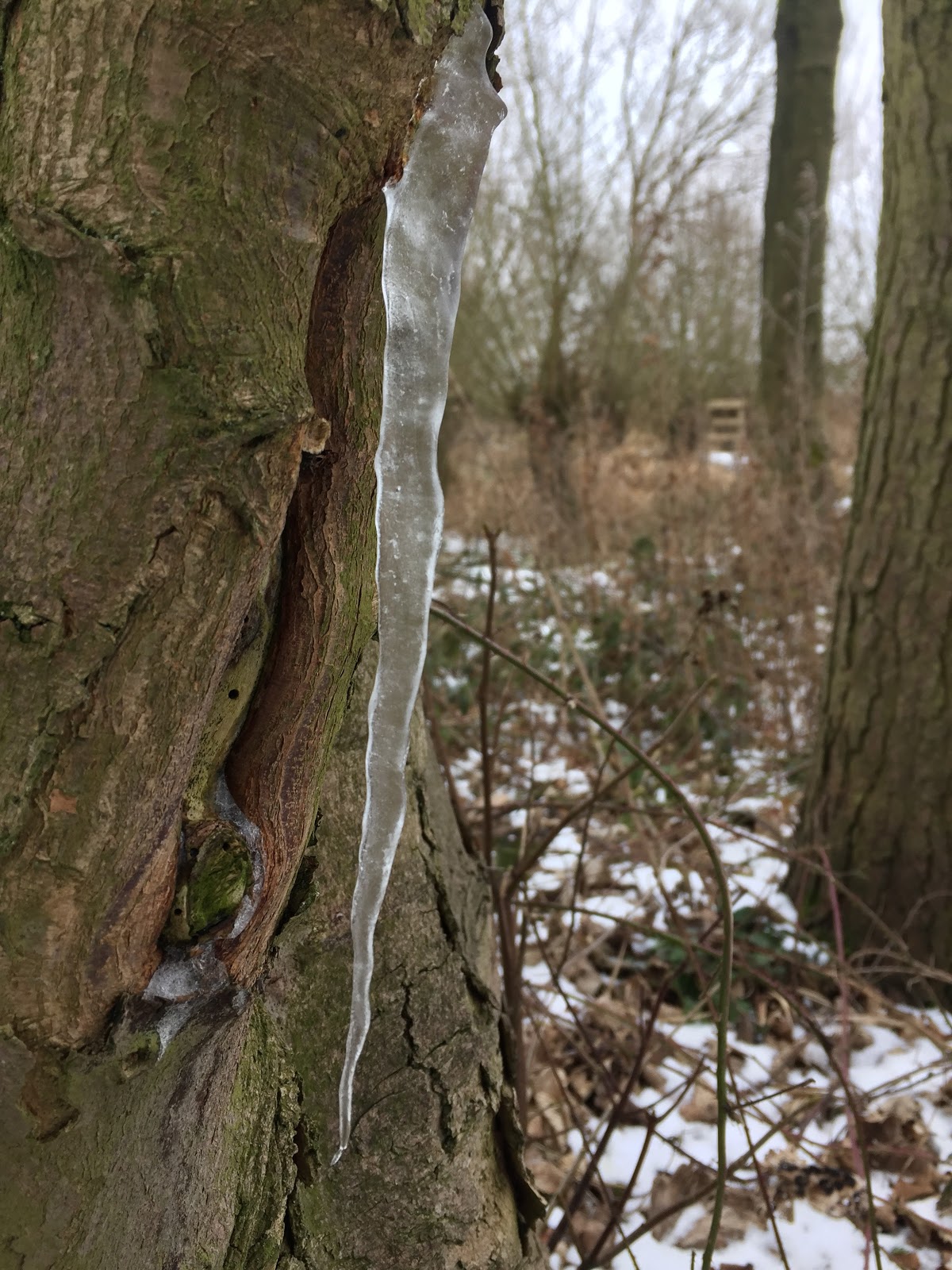
Spring appeared to be well on at Tophill Low, but we seem to have skipped out summer and returned straight back to winter again! The Beast from the east deposited a modest amount of snow around the reserve:
But the wind perhaps left a greater legacy bringing a few trees down:
Narrowly missing the sewage plant - as usual 'it's never the ones you expect':
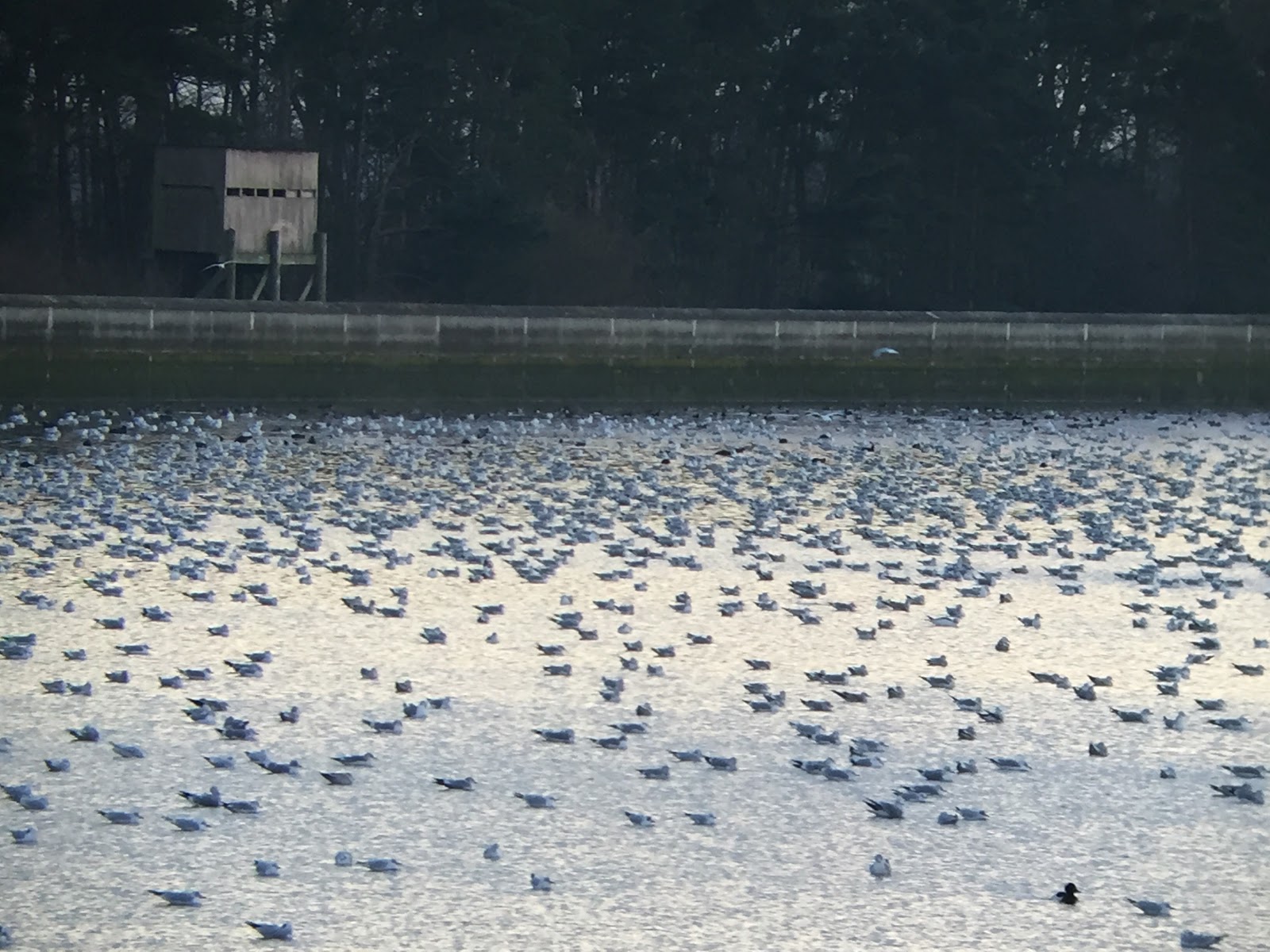
One benefit is it has put the brakes on a manic two months on the reserve allowing me to catch up on the blog. The greatest spectacle of the last few weeks has been the 'beast from the north' present daily on the D reservoir - Maurice Dowson:
If you follow
Martin's gull watching exploits you'll be aware that a glaucous gull is an irregular visitor to the reservoirs - usually only glimpsed in grainy half light amongst thousands of other gulls through gritted teeth and a biting westerly. This 1st going into 2nd year has found the reservoir to its liking now for two months - Brian Colley:
John Leason:
And unfortunately for the connoisseurs it has bucked the trend of all its predecessors being present in daytime (but often not the roost) and showing reliably well as observers enjoy a cup of coffee in front of a log burner behind double glazing. Indeed it has been dubbed 'the winter kingfisher' given the now many great pictures of it after 56 days at the time of writing.
It appears to stay because it is eating dead gulls on the roost. I liken the roost to a human population of several thousand - there are always going to be one or two that don't make it through the night. The glauc' appears to befriend ailing cousins before tucking in later...
It's been a great opportunity for many - and has never occurred in Tophill's long history before and perhaps not again. Especially unusual for a 'northern species' given those like smew - a once common now rare winter visitor to Tophill - seem to be on the wind down with generally milder winters reducing their need to escape Baltic cold. Similarly out of fashion are the ermine stoats as captured briefly by Josh Harrison here - at least it got chance to go on-trend retro for a couple of days this week:
Another white'un here - but this time it is on trend as it represents the future. A few years back great white egrets would have been twitchable around these parts - now they're just a nice day tick. Sue Murray captured this one sporting a leg ring on Hempholme Meadow on the 2nd of Feb:
A useful marker suggesting there are at least two kicking around the river Hull Valley - with another seen on the 4th of March. The inundated ground of Hempholme Meadow can look barren at first, but getting your eye in since Christmas the pair of stonechats have been regular - seemingly disappeared to breeding grounds now - Chris Bell:
Good numbers of fieldfare were tucking in this weekend - but keeping a little more hidden are undoubtedly nice numbers of snipe. Unfortunately there's no telling just how many are in there, and its not cricket to flush them in poor conditions and whilst shoots are active. However marsh harriers have little respect and this bird photographed by John Leason dislodged 18 of them - giving a taster of just what's in there:
Likely some jack snipe too but we'll never know... Meadow pipits can often be heard if not seen - but occasionally very well like for Steve Hines here - very uncommon to get them at this range at Tophill:
But the word on everyone's lips has been kingfishers; And we are delighted to report that they are prospecting again this season. Prior to their arrival we repaired the 'artificial nest' and its camera - although they seem to still prefer 'their' hole. We also gently lowered the bank allowing the left half of the hide to come into play for this season which was unusable last. We wont count our chicks out yet - but should they get going we'll be wiring up the shutters to prevent noise like last year, and likely adding some scrim netting with lens apertures cut to minimise hide disturbance. They're not present all the time by any stretch - but a few have been lucky and captured some excellent shots - Mark Clayton:

Steve Shipley:
We are quite pleased with the perching sticks being nicely rustic. However this is one of the most challenging aspects of wardening Tophill Low, and whilst position and texture are good we reckon now that the resonance is incorrect; These twigs are too pulpy and are not up to the job of beating a stickleback to death upon. This means executions will be performed elsewhere and photos lost. We're currently sourcing a suitably hardened, rustic with natural broken tip - but not too many as that makes set up unpredictable - bonus moss / lichen / fungal embellishment correctly placed stick against a neutral background...
As such it seems only fitting that the new membership cards for Tophill Low are of last years Kingfishers. The winning picture (voted by 25 Yorkshire Water office staff on image merit alone) was kingfisher by Stuart Allen:
Stuart gets a year's membership to the reserve and his picture immortalised in 720 micron plastic. For everyone else prices remain at £25 for adults and £17 for concessions (a small increase is likely next year - but we're conscious that we've been doing a lot of work and disturbance around site this one).
Memberships are due from April 1st;
please note that new cards are not available just yet - they will be available from later this month - I'll put an announcement out when that is the case.
As ever there are thousands of brilliant images to choose from at Tophill Low - I choose an initial selection that will work for me as a composition with neutral backgrounds for text etc - here were the other contenders:
Cuckoo - Don Davis:
Goldcrest - Darren Smith:
Great white egret - Dave Hobson
Kestrel - Josh Harrison
Kingfisher pass - Tony McLean
Otter - Neil Murray
Reed bunting - Geraldine Gray
Tawny owl - Francis Bell
Yellow Wagatil - Sonia Johnson
So moving south; The herons have been busy nest building all season and as ever its unclear how many birds are in there - but they seem to have survived the beast and at least one platform still present:
The peak count has been of two herons chasing off eight more attempting to land - so that's a really good sign of a building colony which is the dream - Mark Clayton:
Otter erratically present as ever - sometimes showing very well - apparently 8:30am was a predicable time in early Feb - Tony McLean:
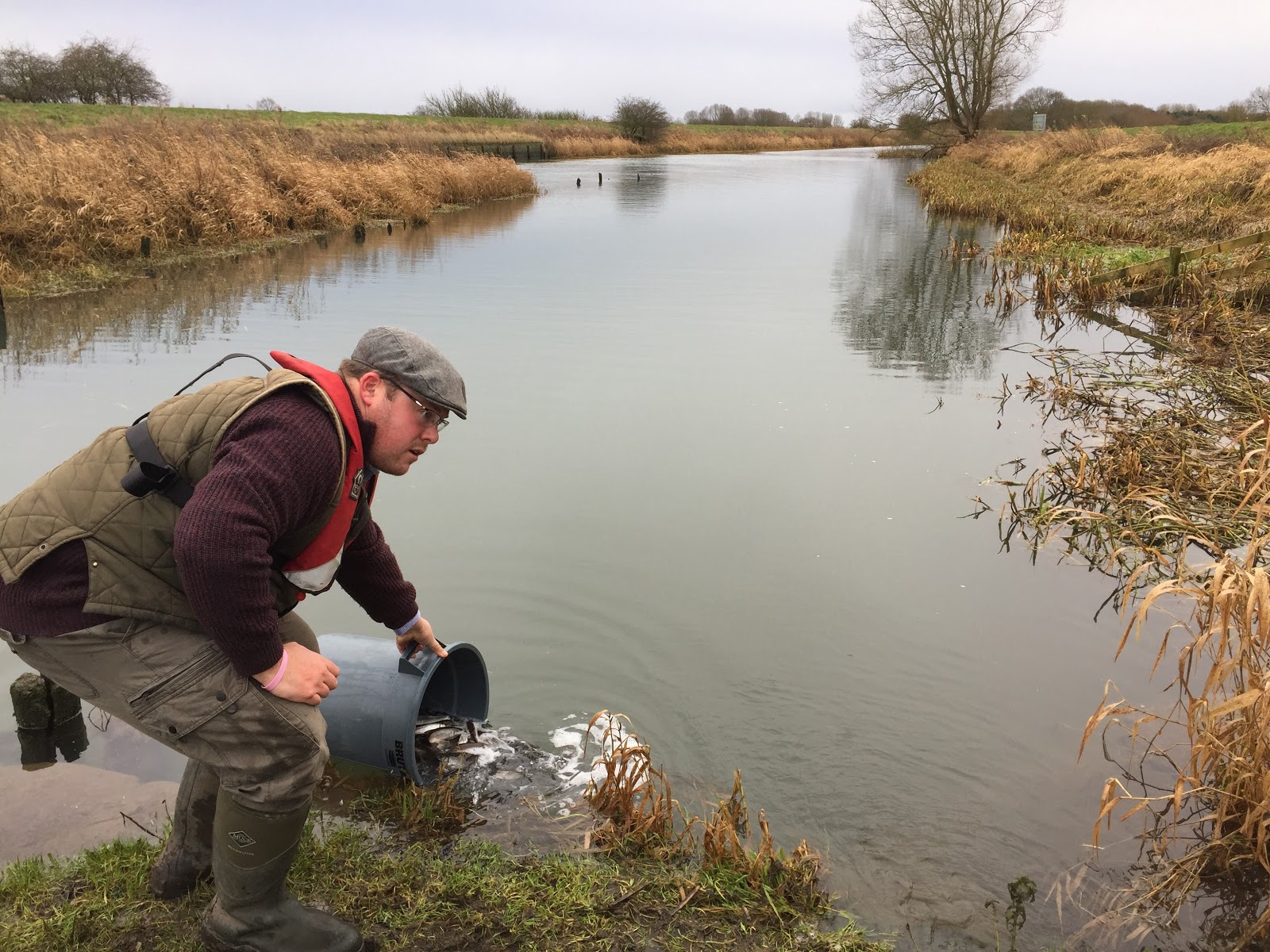
And great news for piscivores human or otherwise was a big restock of chubb in the river Hull - Mike Lee from the Environment Agency bucketing several thousand out above and below Hempholme lock:
Sunny days have seen sparrowhawks active and displaying in D woods pointing at a good season - Sue Murray:
Roy Lyon:
Great spotted woodpeckers seemed quite late drumming this year but are now back in force and very evident around the standing deadwood of the reception hide - Steve Hines:
For phenology enthusiasts out there Les Bardwell has been keeping tabs of the emergence time of coltsfoot - one of the first spring flowers and tells us it was two weeks early this year before the snow. Perhaps it may have been better delaying a bit:
So whilst the north end of the site has been left tranquil we have been all hands to the pumps further south. A major job has been trying to keep a good head of water in the new reception hide pond. Last autumn it got very low rendering the pond dipping platform unusable for all but the most ape like of local schoolchildren. It never disappeared or matched the adjacent water table so the problem appears to have been with the bund rather than at the bottom. As such we have installed a curtain of plastic and clay extending 8feet down through the peat and into the glacial clay beneath to try and stem it:
Time will tell if it works... Bruce King:
Mud pie's here have paled into insignificance with those of the southern end of the reserve. In previous postings we explained the clearance works undertaken as prep for the new fox fence and habitat tweaks. We have been into these in a big way through early February. Starting all the way at the southern tip of the reserve we have cleared the dyke out behind south scrub:
This has allowed the water level to drop by 8cm in south marsh east - that's not insignificant given we only had 40cm of freeplay before so that equates to a lot more fun for summer wader season.
Amazingly the operative managed to get a machine to the rear of south marsh west and clean the whole outlet dyke out and all around the islands - and then all the way along the west and northern shores of the marsh:
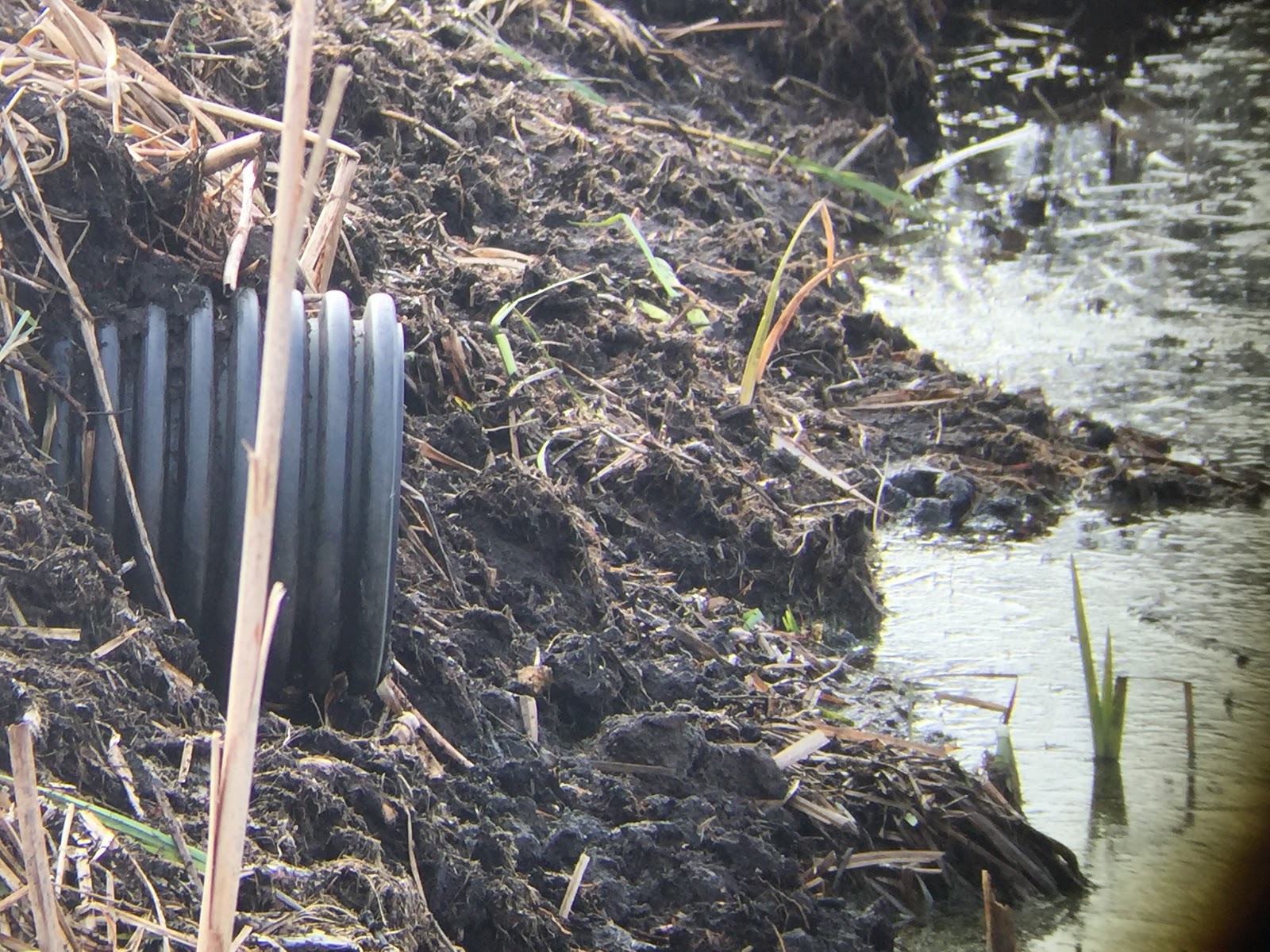
New bittern trenches have gone into the South Marsh West bund, and new shelduck tunnels into the islands:
Resident nest box constructor Jim Evans has been manufacturing these wildfowl boxes as a new trial for the marsh (this one a former barn owl box too past it to merit going back up a tree):
Along with grey wagtail units for under bridges on site; Quite likely one of the Tophill birds back today:
'Lukas bay' has been excavated and opened up bringing the action 30 feet nearer the hide - with new photo perch logs installed for close in pictures this season:
Out on the marsh the little ringed plover island has been tweaked. Previously there was a big area of dead ground in front of the hide with waders only infrequently approaching close in:
Now a network of spits which will run with water flow across the area, which again should be brilliant later this season:
The volunteers have been grafting hard removing old tern island netting to 're-wild' the marsh and weeding out gravel islands ready for the nesting season:
Of course all this is a waste of time if we end up with the fox pillaging it again like '16/17. So again the volunteers have stepped up and installed a wall that Mr Trump would envy.
We certainly don't want to be redoing it because its sub-standard - so we've gone at the larger and of the scale to ensure its right. Whilst massive and hopefully fox proof, we've hopefully fairly well concealed it out of immediate eyeshot - and once coppice returns again in a year or two it should be all but invisible to the visiting public. Its necessitated additional projects like a new bridge for electric fence checks (made from the now departed inlet hide):
As usual the challenging bit will be the marsh itself - some of the posts in this run were 8 feet long - and were pushed in by hand!:
Hopefully this will leave the fox merely day dreaming of what could've been - Tony McLean:
Mick Bailey:
Shelduck have been amassing with up to 23 seen on site - Brian Colley:
We're conscious that we may already be deterring birds like them from using the marsh and we've still got a few weeks work left. However I am keeping focused. The target this year is to secure breeding tern and little ringed plover - both of which get going in May, and spring passage waders mainly moving from the last week in April in number. The most successful year ever for terns was 2015 - and we didn't even fill the marsh with water until May that season (account
here). I apologise for the disturbance - but we want to get it finished and working for these species this year.
Unfortunately we're still working on mink trapping at present with still no takes. We clearly have a very cunning adversary. A tantalising glimpse of a mustelid in the otter holt camera at North Marsh nearly popped the champagne - until it woke up and was a mink...
An added job that has been long in the offing was to clean some areas of East Pond out and try and find out why its been losing water since 2015. Hopefully a success on both fronts:
Further up the site - more works. These shattered remains here are the willows growing adjacent to South Lagoon:
Last pollarded around 20 years or more ago they had become too leggy to offer screening against disturbance from the O res path - and worse still were collapsing into the water. Once they take root they are an immense task to remove - and here the mud is 8 feet deep. Those standing shaded out the hawthorn hedge and made that leggy necessitating laying. With the volunteers alone this would nearly be a winter of work cutting and winching individual stems out and smashing the hedge in the process. With a 14t digger present we were able to simply fell all the tops into the lagoon and then lift them out and over in safety.
They may look a bit beaten up now - but being willow they'll have 8 feet on them in a year or two - and allow the hawthorn to get away in the meantime. Unfortunately there is no magic spell which can be woven to get them to the required shape overnight. Like much of the habitat work we do at Tophill we often have to go back to a sub-optimal point from a post optimal - to reach the optimal...
There is also the issue of the lagoons and water sampling to throw into the mix too. To meet legislation further infrastructure will be required on both the outlets of the lagoons before 2020 - potentially entailing their replacement and fitting with sampling access / flow meters etc.
If we are knocking holes in the screen to do this it seems prudent to do it all at the same time. And in the same vein we have been working on the link path from North Lagoon to O reservoir. At face value it perhaps seems an odd choice when there is the road next door but I shall explain;
The biggest challenge for the volunteer wardens and I is dealing with the public. People don't read signs. If they do, they ignore them if they don't like them; Then in most cases become aggressive and mouthy if challenged directly courteously or curtly depending on the individual - the result rarely differs. The layout at Tophill Low has been a big problem for a good while and has consistently fed this conflict leading to poor visitor experience and in some cases direct harm to the wildlife or significant confrontations with staff.
One of the biggest conflict areas is the disjointed southern half of the reserve. Prior to 2000 all access to the reserve was undertaken by turning left at the water works main gates - passing the former western entry to the residential properties and entering the car park from D reservoir from which it was all pedestrianised. On expansion of the water works the current circuitous route right at the gate around the lagoons and water works was installed. This has engineered in a lot of problems repeating the same conflicts time and again.
Porosity of the reserve. From the main WTW gates there have been five points to enter the reserve in current or old setups - and indeed the whole of the O reservoir without ever passing the ticket point. The income is important as it helps to run the reserve day to day. It is annoying when people don't want to contribute to the upkeep of the reserve (
Listen closely to the conversation in the background of the amur falcon video here...by no means an exception). But ticketing also maintains the exclusivity of the reserve for visitors coming to enjoy wildlife. People walking dogs around the O Reservoir is a regular issue. There is no ambiguity in the signage anymore so it is people simply ignoring the signs. Generally this is cheeky curiosity, but ground nesting birds, the roe deer people delight in seeing at the moment, or our grazing stock on loan can't differentiate this if a dog is coming after them. This can either be the genuine "he's never chased anything before - he wouldn't harm it if he caught it" panting owner running after it, to the dedicated deer poacher running lurchers. This also puts us at odds with the residential properties whom own dogs. Its very difficult to explain to a visitor they can't bring their dog whilst someone is walking theirs along the road in the background. Currently there is an agreement in place that the householders do not walk their dogs along the road in public open hours, but this relies upon goodwill and solicitor back up which is far from ideal. The problem is that the lagoon road route is both an access for the private properties and the approach to the reserve, and yet also inside the reserve. If this could be separated out it would save a lot of argument and ambiguity. Removing the gate from the car park to D res directly has overnight cured much of this same conflict in the car park as part of the reception hide project - it would be great to do the same for O.
Poaching and antisocial behaviour. We've had odd
incidences of poaching and obvious beaters seeking to dislodge wildfowl for
nearby shooters, but perhaps most disturbing a pick up with three
guys with shotguns opening up on birds on the SSSI a couple of years
back. We've also thrown youths out of the lagoon hides smoking cannabis,
cleared up the beer cans etc. Its no coincidence that the dumped terrapin
of south lagoon was outside the first hide you pull up outside in a
car. Quite often the first defence of people intercepted is 'its
public land I can do what I want’ - because they have not entered a physical
boundary they do not believe or respect they are on private land. If we
could seal off O res and the lagoons from this access and force
everyone past the ticket machine and well placed warden staff it
would solve a lot of ills at source and potentially vandalism or damage in
future. We've been fortunate with Tophill's remote
location - but increasing human population everywhere means this
is not going to go away - only grow.
Safety. The several pedestrian road crossings
aren't ideal, either for youngsters unaware, or dare I say the older
birder too focussed on the siskin above. Frequently visitors walk
along the road rather than the pavement with the blind corners and the threat
of oncoming delivery vehicles. At Yorkshire Water we have to take safety very
seriously. If we can engineer out risk - we will. There's also no
accounting for stupidity. By routing people via the reception hide they
can hopefully absorb the safety signage or be told it directly. Such as
the group bringing their dinghy to go in the res the other year, the guy
dissuaded whilst stripping off and readying his towel for a swim on in O res
last summer, the fishermen on D res:
Or this lad captured on the otter project cameras just the other week:
Whilst some would apply a Darwinian principle; It's a lot of paperwork for me and disturbs the birds too - so if we can try and cut down on this sort of thing we will.
Visitor experience. Tophill is a very confusing site
for humans. Someone once advised me that 'you can't force them somewhere they don't want to go.
You need to make them think that's where they want to go.' When queried many visitors go north - not because
it’s better for wildlife necessarily - but in many cases simply because its
counterintuitive to walk back the way you just drove in. This was a key
problem with the old wildlife centre. The new reception hide works really
well for northbound traffic as everyone passes the warden staff,
sightings books and site maps and can work out how to get the best
out of their day. The O res and southern route at present bypasses
all of this, and sidelines warden staff helping visitors and protecting
wildlife. People in future can make a conscious decision whether to go
north or south - rather than just being railroaded north or sneaking
south.
So the goal is to link the north lagoon path (hence all the swamp walk and
new path spur last year) with the O res. This will mean one point of
entry, one point of exit - all past the reception hide. O reservoir
and the lagoons will no longer be accessible from the access road and will
be gated off for pedestrian access. The access road will become just that
- the access road. This was to be a gradual process as time and money allowed - but we have been given the opportunity to progress it this year.
The only potential downside of this is disturbance to birds using the lagoons if
not done sensitively.
Whilst it’s fair
to say they haven’t been in peak form for many years the recent works of 2015
have given them a new lease of life.
A
lot of work and sacrifice went into this so I certainly don’t want to impact on
them.
We’ve managed to carefully tuck a
route against the hedge largely well under cover and out of sight of birds on the lagoon - particularly at the critical wader season when the trees are fully leaved:
To ensure the siskin holding alders remain, and navigate areas too narrow for a conventional path installation of some lengths of boardwalk was required.
Sections of the South Lagoon are currently
open as shown further up the posting regardless of the 'new route' – and in time all will re-grow or be covered.
The main and pressing section to mask of is immediately
adjacent to the North Lagoon hide.
As a result until
we get this covered off sufficiently we won’t be opening it just yet and it’ll
be ready when ready. But a great opportunity to complete a project that will go a long way to rectifying a lot of ills.
So that's one big element undertaken this winter. Now for another...
Passing the South Lagoon Inlet hide you may have noticed it is no longer there (after being closed for sometime):
The reason for this is that unfortunately it has met the end of its lifespan and the work involved in sureing it up did not justify its benefits. The key problem is the support legs; visible here is rather alarming levels of rot present in the untreated larch logs that were used to support the structure:
Whilst the hides themselves were well built (often by folks still visiting today) the budget was not made available 30 years ago to provide treated timber. In the air this tends to be OK - but the issue is at ground level were the rot sets in. We've already undertaken several hide repair or replacement projects - North Marsh was replaced in 2009:
But wherever possible we aim to repair and maintain the existing hides: Both lagoon hides were fully underpinned with staging in the last 7 years:
This was ultimately a significant factor in the old car park hide demise. We suspected there was some rot in the legs but were a bit horrified when we tried to salvage what were considered solid telegraph poles which turned out to be 90% pulp wood:
This prompted an in depth look at the remaining stilt hides. East hide surprisingly given its exposed location received a clean bill of health:
South marsh west 'L' hide was found to have some rotten supports (We undertook replacement of two legs 4 years ago). So we've had the professionals in underpinning it elsewhere - all that it is readily visible to the keen eyed is this new section of floor:
However the north hide at the top of the D reservoir was found to have six of its 8 legs on their way out:
Coupled with a rotten stair case which needs complete replacement:
Whilst the actual hide is sound at the top, replacing the supports is no simple or DIY task for the volunteers. Whilst work can be done on the cheap and 'by my mate...' we cannot do so within Yorkshire Water - it needs safety qualified and vetted companies working upon it. So we had a serious look at costings and to completely underpin and repair the structure was significant. So significant in fact it is cheaper to start again with a new structure outright. Unfortunately it is the end of the line for this hide and the bat boxes were relocated last year in expectance. I can fully understand that its a shame and many happy memories and recollections go with these structures - but alas I am tasked with making the call on when their time is due.
Replacement is simple enough. However this prompts the question; Is it worth replacing this hide like for like? Asking around regulars on the reserve the general view is that the hide is occasionally handy for a bird at the north of the reservoir, but it is seldom used for prolonged observation as quite simply it looks straight into the sun all day long and in any kind of sunlight the birds are unobservable. Though its fair to say it does deliver the best sunset shots on site:
With its substantially set back position it also loses a lot of view under the walls. Quite often the route march to get that close up of a grebe sp. is fruitless as its disappeared below the wall. Some favour it for barn owl photography or passerine watching behind the hide in better light, but its a lot of structure for the purpose. Perhaps its most regular usage is simply as a half way stop off and shelter on the walk around the D res.
In many case the purpose of this hide could be much better met by a simple low level screen much like the O reservoir - and this is the way we hope to go here. Better for identifying problematic 'top end of res' birds and better for photography.
However this means we effectively lose a 'proper' hide at Tophill. Yorkshire Water have kindly given us the option to think about keeping the same number - but considering a different location, and also the thought of doing something a bit 'out there' for the serious enthusiast. Initially the obvious thought was simply another better placed tower hide perhaps on the western side of the D res in better light. I have no doubt it would be stoically welcomed as 'a good solid proper birder's hide.' The reality is that it again would be woefully underused, and not offer any new benefit over the reception and east hides on the res.
So we've gone back to the drawing board and considered which hides are packed and favoured at the reserve. And generally it is those with close in and particularly photographic opportunities. North Marsh and Hempholme have both been standing room only much of summer. If we could do something that replicated and bettered these it is sure to be a hit. After a lot of consultation with regulars and volunteers we have centred upon the installation of a photographic hide on South Marsh East overlooking 'sandpiper bay' where the lagoon outfall delta's and hold the attention of sandpipers, egrets and kingfishers close in.
Since the construction of the sandpiper bay its become obvious SME 1 hide is a little mis-orientated now with cameras competing to try and shoot through the extreme left flap:
Initially thoughts were a dog leg on the existing hide (which is remaining indefinitely as its on a concrete slab). But instead we've looked back at previous Tophill hides and gone for something low level. As some of you perhaps notice on the drive in to Tophill there is what appears to be a piece of plywood sluice board banged into south lagoon:
This is in fact the first photographic hide at Tophill - overlooking exactly the same habitat and waters we are proposing further down. Siltation, vegetation and site changes meant it was long since abandoned. But we are looking at v.2 further down the site...
So full details will follow in due course... Whether it will get installed in time for this breeding season is still up in the air at the moment - but it hopefully explains some of the workings present:
And finally back up to the car park for a finishing flourish... We will be retarmacing the broken and worn surface on the week commencing the 19th of March Monday to Friday So an advance warning; the car park to Tophill Low Will be closed for the duration. Currently we're working on alternative parking options - but if you can tailor your visits around this it will certainly help to ease pressure on the limited space we will have.
If I'm still standing at the end of all this - I hope I and everyone else can look forward to an excellent breeding season - with the oystercatchers already present and correct - Sue Murray:
And the roe deer readying for the rut - Josh Harrison
So thanks to everyone for their patience - not just for this winter bit the last three. A huge amount of work has been undertaken; and whilst at times its difficult to see the purpose beyond all the mud and modifications, I see this as being the close out of the biggest spell of investment in the future of the reserve since its opening in 1993. The crucial thing I hope everyone can recognise is that after a period of uncertainty on the future a few years ago, it can now progress firmly established as a nature reserve with the best habitats for wildlife and the best facilities for people keen to experience it.
Tophill is an amazing place - the diversity of wildlife is perhaps only topped by the diversity of dedicated people who visit and volunteer on it. It is my hope going forward from this summer we can explore these to the full as there is a wealth of knowledge to tap and wildlife to find. And hopefully this blog will return to a more wildlife orientated slant than the current construction journal! I can get back to the things that float my boat like this aerial crown-gall taken by Doug Fairweather:
He reports it is a gall caused by an agent on willow trees. Normally these agents are wasps or fungi - but in this case it is a bacterium and growing on a pollard we cut 5 years ago. Proof as ever there is never nothing to see and never nothing left to learn...




 Steve Shipley: